|
 |






What is formatting? It's the presentation of such textual elements as words, punctuation, lines, paragraphs, titles, graphs, in-text citations, footnotes, and bibliographies.
There are many diverse sets of formatting rules (known as formatting styles). Here are links to websites that summarize the most widely used formatting styles: CMS, APA, The Bluebook, CSE, and MLA.
CMS (FOR ALL DISCIPLINES)
The Chicago Manual of Style (CMS) is the starting point for most English-language formatting styles. CMS covers 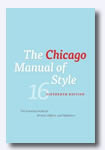 every facet of writing a paper, from grammar and vocabulary to punctuation and headings to tables and references. To learn more about CMS's two documentation systems (the notes-bibliography system for the humanities and the author-date system for the sciences), refer to the CMS website and to Purdue University's Online Writing Lab.
APA (FOR THE SOCIAL SCIENCES)
The American Psychological Association (APA) provides writers with its own formatting style. Similar in many 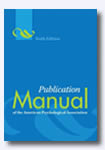 ways to CMS, the APA formatting style uses "in-text citation" for its documentation and is especially common in the social sciences. To learn about APA formatting, please refer to Purdue University's Online Writing Lab.
THE BLUEBOOK (FOR LEGAL STUDIES)
Writers in the field of law should grow familiar with The Bluebook, which presents a complex formatting style that is 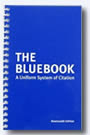 widely used in legal writing. For descriptions and many examples of Bluebook citations, please consult Introduction to Basic Legal Citation at Cornell University's School of Law and select the appropriate web pages from the left-hand column.
CSE (FOR THE NATURAL & PURE SCIENCES)
Although many various formatting styles apply to the natural sciences and the pure sciences, a small handful are 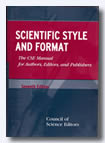 prominent. The Council of Science Editors (CSE) promotes the name-year system, the citation-sequence system, and the citation-name system. For an extremely clear and helpful explanation of these three systems, please consult Pennsylvania State University's CSE Citation Quick Guide.
MLA (FOR THE LIBERAL ARTS)
Many writers in the liberal arts, especially in literature, use the formatting style presented by the Modern Language 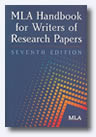 Association (MLA). To learn more about MLA formatting, please go to Purdue University's MLA website.